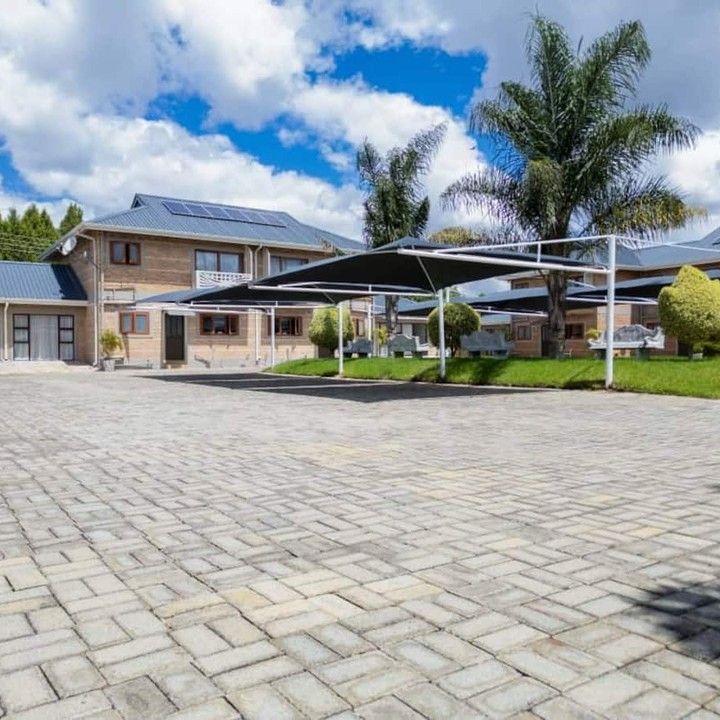
Diaspora Property Purchases in Zimbabwe: A Legal Guide
Or, How to Buy Property Back Home Without Developing High Blood Pressure
For many Zimbabweans in the diaspora, buying property back home begins as a beautiful dream.
It starts innocently enough.
You are sitting in Birmingham, Johannesburg, Perth, Toronto, Dallas, or somewhere in the United Kingdom where the weather behaves like it personally dislikes human happiness. You suddenly miss home. You miss sadza. You miss family gatherings. You miss hearing somebody say:
“Ko kumusha makaronga sei?”
Then comes the decision.
“This year, I’m buying property in Zimbabwe.”
And just like that, you enter one of the most emotionally rewarding — and occasionally spiritually testing — legal processes known to mankind.
Diaspora property purchases are unique because they combine three dangerous ingredients:
- distance,
- trust,
- and WhatsApp confidence.
Particularly WhatsApp confidence.
In Zimbabwe, many property transactions begin with messages such as:
“Boss this deal is VERY clean.”
“My brother you must move fast.”
“There are already three buyers.”
“The owner is in a hurry because he is travelling.”
These words have separated many hardworking people from perfectly respectable amounts of foreign currency.
The reality is that buying property remotely requires more than enthusiasm and screenshots.
It requires structure.
At David K Law Group Attorneys, we have seen both successful investments and avoidable disasters. In many cases, the difference between the two is not luck.
It is due diligence.
Because unfortunately, the diaspora buyer is often viewed as:
- financially capable,
- physically absent,
- emotionally attached to “coming back home,”
- and therefore easier to pressure into rushed decisions.
This is why professional legal guidance matters.
A proper conveyancing process is not designed to frustrate buyers.
It is designed to protect them.
Before any money changes hands, several critical issues should be verified:
- Does the seller genuinely own the property?
- Is the title deed authentic?
- Are there unpaid rates or taxes?
- Is the property under dispute?
- Is the land properly subdivided?
- Are there caveats or encumbrances?
- Is the seller legally authorised to sell?
- Is the property on State land, council land, or privately held title?
Because in Zimbabwe, the phrase:
“The papers are available”
can mean many things.
Sometimes it means there is a genuine title deed.
Sometimes it means somebody has a photocopy from 1998 folded neatly inside a plastic bag.
The distinction is important.
Diaspora clients also face another challenge:
the “relative representative.”
Now, to be fair, many relatives are trustworthy, dependable, and genuinely helpful.
Others, however, begin as “caretakers” and slowly transition into something resembling majority shareholders of your property.
You may purchase a stand intending to build a retirement home, only to discover during your next visit that:
- somebody has planted maize on the land,
- two cousins are staying there “temporarily,”
- or a neighbour now confidently explains that boundaries were “adjusted communally.”
At this stage, even Google Maps begins to lose hope.
This is why formal legal processes matter.
Where a buyer cannot physically attend to transactions, properly drafted Powers of Attorney become essential. Funds should move through secure and accountable channels. Documentation should be independently verified. Searches should be conducted professionally.
Not emotionally.
Because emotion has funded many regrettable investments.
Sophisticated investors understand this principle clearly.
Property acquisition is not merely about purchasing land.
It is about acquiring enforceable rights.
An experienced conveyancer therefore acts not merely as a paperwork processor, but as a transaction risk manager — coordinating legal compliance, safeguarding client interests, verifying ownership structures, and ensuring the transfer process withstands scrutiny long after excitement fades.
And in Zimbabwe, scrutiny eventually comes.
Sometimes from banks.
Sometimes from authorities.
Sometimes from family members who suddenly “remember” historical ownership arrangements after construction begins.
The legal process therefore matters immensely.
Another common misconception is that buying property remotely should somehow be faster because the buyer is “sending money from abroad.”
Respectfully, the Deeds Registry does not become emotionally overwhelmed by exchange rates.
Property transfers still require compliance with legal procedures, tax clearances, local authority requirements, and registration formalities. While experienced practitioners can help transactions move efficiently, legitimate processes still take time.
And that is often a good thing.
Because speed without verification is how people end up buying:
- disputed land,
- non-transferable property,
- incomplete developments,
- or stands positioned in locations best described as “optimistically residential.”
The goal is not merely to buy property.
The goal is to buy correctly.
At David K Law Group Attorneys, we appreciate that diaspora investments often represent years of sacrifice, discipline, overtime shifts, separation from loved ones, and long-term planning.
For many Zimbabweans abroad, property ownership back home is more than an investment.
It is identity.
It is legacy.
It is permanence.
It is the desire to remain connected to home regardless of distance.
And those investments deserve careful legal protection.
Because while hope is important in property transactions, hope alone should never conduct due diligence.